


 Mar 07, 2026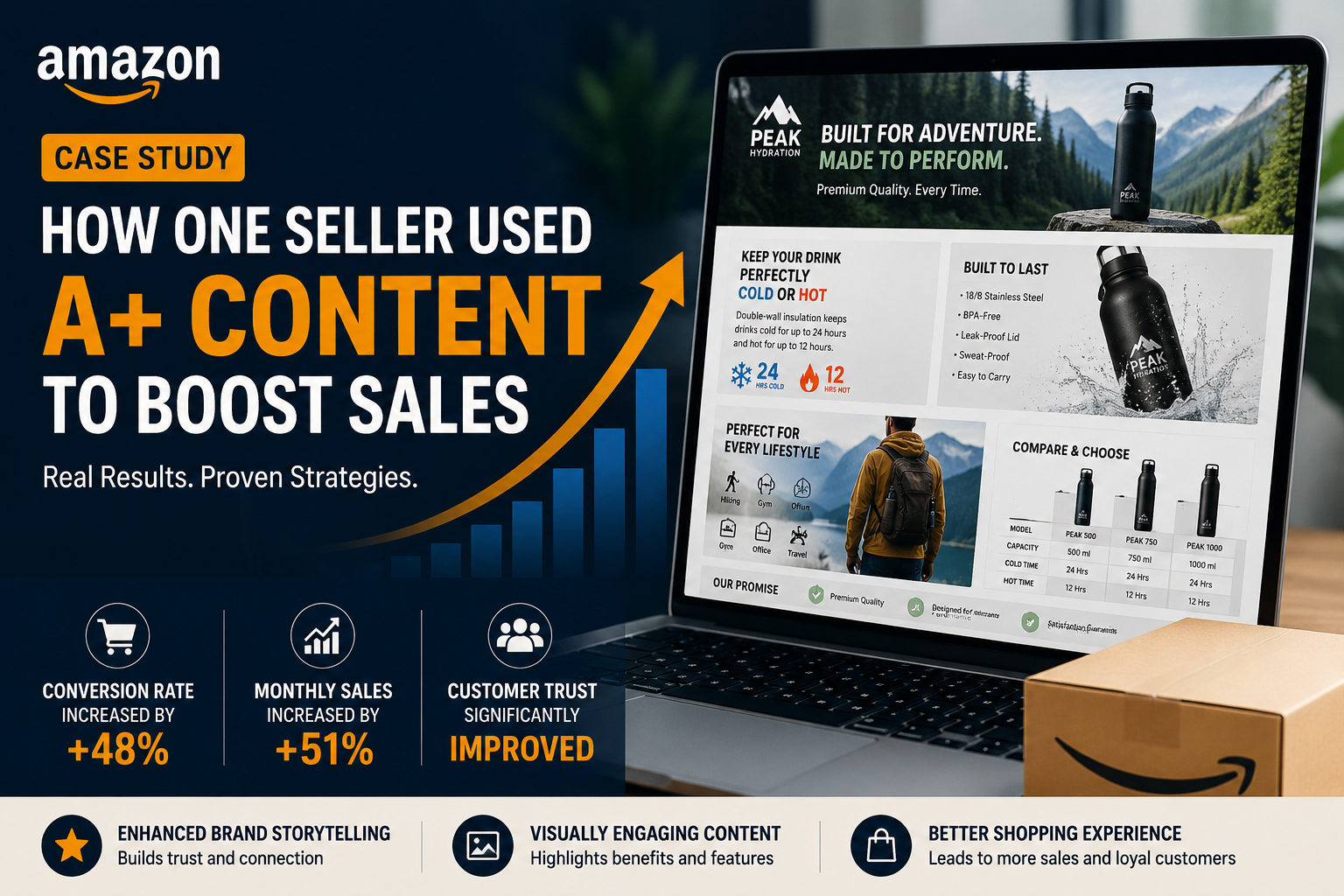
How One Amazon Seller Used A+ Content to Boost Sales
Selling on Amazon is more competitive than ever. Thousands of products compete for customer attention, making it difficult for sellers to stand out. While many sellers focus on advertising and pricing, one powerful tool often gets overlooked—Amazon A+ Content.
In this case study, we explore how an Amazon seller transformed their product listings using A+ Content and achieved higher conversions, increased customer trust, and stronger sales performance.
What Is Amazon A+ Content?
Amazon A+ Content allows brand-registered sellers to enhance their product detail pages with premium visuals, comparison charts, banners, feature highlights, lifestyle images, and compelling brand stories. Instead of relying only on standard text descriptions, A+ Content creates a rich shopping experience that helps customers understand the product and its benefits.
When used strategically, A+ Content can increase customer confidence and improve conversion rates by answering questions before buyers even ask them.
The Challenge
An established Amazon seller was offering high-quality kitchen accessories. Despite receiving consistent traffic through Amazon PPC campaigns, the products were not converting as expected.
The seller faced several issues:
Low conversion rate despite healthy traffic.
Customers leaving the listing without purchasing.
Frequent questions regarding product features.
Strong competition from similar products.
Standard listings that lacked visual appeal.
Although the products had positive reviews, shoppers struggled to understand what made the brand different from competitors.
The Strategy
Instead of increasing advertising spend, the seller focused on improving the customer experience by redesigning the product listings with professionally optimized Amazon A+ Content.
The strategy included:
1. Professional Lifestyle Images
High-quality lifestyle images showed the products being used in real kitchens, helping customers visualize ownership and understand practical applications.
2. Feature-Focused Graphics
Important product features were converted into easy-to-read visual icons rather than long paragraphs. This made the listing more engaging and easier to scan on both desktop and mobile devices.
3. Brand Story Section
A dedicated brand story explained the company's mission, commitment to quality, and customer-first approach. This helped build trust and created a stronger emotional connection with shoppers.
4. Comparison Chart
A comparison table showcased different products from the same brand, encouraging customers to explore additional options and increasing cross-selling opportunities.
5. Problem-Solution Content
Instead of listing technical specifications alone, the new content focused on solving customer problems. It explained how the products simplified cooking, improved organization, and delivered long-term value.
6. SEO-Friendly Copy
Although A+ Content itself does not directly influence Amazon's search rankings, the product listing was updated with clear, customer-focused language that aligned with buyer intent. The overall listing remained optimized for relevant keywords in titles, bullet points, and backend search terms.
The Results
Within several weeks of publishing the redesigned A+ Content, the seller experienced significant improvements.
The results included:
Higher conversion rate.
Increased daily sales.
Better customer engagement.
Reduced pre-purchase questions.
Lower return rate due to clearer product expectations.
Increased average order value through product comparison modules.
Improved brand credibility and customer trust.
Most importantly, the seller achieved these improvements without significantly increasing advertising costs.
Why A+ Content Works
Customers make buying decisions based on trust and understanding. Standard listings often fail to communicate product value effectively. Amazon A+ Content bridges that gap by providing visually engaging information that educates buyers and builds confidence.
Effective A+ Content helps customers:
Understand product benefits quickly.
Compare different products within the brand.
Visualize real-life usage.
Learn about materials and quality.
Feel more confident before purchasing.
This improved shopping experience naturally leads to stronger conversion rates.
Best Practices for Creating High-Converting A+ Content
To maximize the impact of your Amazon listings, follow these best practices:
Use high-resolution, professional images.
Focus on customer benefits rather than technical specifications.
Keep text concise and easy to read.
Highlight your unique selling points.
Include comparison charts where appropriate.
Maintain consistent branding across all products.
Use lifestyle photography to demonstrate real-world use.
Update A+ Content regularly based on customer feedback and product improvements.
Common Mistakes to Avoid
Many sellers fail to achieve results because they make avoidable mistakes, including:
Using low-quality graphics.
Overloading images with excessive text.
Copying competitor content.
Ignoring mobile users.
Focusing only on features instead of benefits.
Failing to maintain a consistent brand identity.
Avoiding these mistakes can significantly improve customer engagement and purchasing decisions.
Final Thoughts
Amazon A+ Content is more than just an attractive design feature—it is a powerful conversion optimization tool. By combining professional visuals, persuasive copywriting, and strategic branding, sellers can create listings that educate customers, build trust, and increase sales.
Whether you are launching a new product or improving an existing listing, investing in professionally designed A+ Content can deliver long-term benefits for your Amazon business. Instead of relying solely on advertising to drive growth, focus on creating a better shopping experience that converts visitors into loyal customers.